Sunday, 15 February 2009

Gordon Brown 'could have saved HBOS without need for Lloyds merger' - But it doesn't help on disabling a nations ambition.


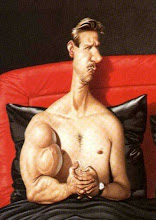
Pic Courtesy TractorStats - Keep the faith dude.
Gordon Brown could have saved HBOS without engineering the merger with Lloyds TSB that has brought the two banks to the brink of disaster, the Government's own financial watchdog has admitted.

By James Kirkup, Political Correspondent
Last Updated: 10:20PM GMT 15 Feb 2009

Lord Turner of Ecchinswell, the chairman of the Financial Services Authority, suggested in an interview yesterday that HBOS could have been rescued with financial help from the Government, without the need for a takeover.

At the time of the merger - in which the Prime Minister personally intervened to ensure its passage - ministers repeatedly insisted that a union with Lloyds was the only way to save HBOS and the wider financial system from meltdown.

However, speaking to the BBC on Sunday, Lord Turner said: "There could have been a different way of directly supporting HBOS and keeping Lloyds separate."

Lord Turner also disclosed that the FSA and the Treasury had known HBOS was heading for the massive losses that have raised significant fears over the viability of the merged Lloyds Banking Group (LBG) since they were disclosed on Friday.

His remarks will increase the scrutiny on Mr Brown, who is facing mounting political pressure over his personal role in the crisis now gripping the British financial sector.

The newly formed LBG is 43 per cent owned by the taxpayer, and ministers are prepared take a majority shareholding in the bank if its situation continues to worsen when the stockmarket opens for business again today (MONDAY).

Investors in Lloyds TSB have already lost three-quarters of their money since the "shotgun wedding" of the two banks was announced.

On Friday, shares in the merged group fell by a third after it revealed that HBOS had lost more than £10 billion last year.

By contrast, the old Lloyds TSB business made a £1 billion profit.

Lord Turner said that the FSA's secret "stress testing" analysis of British banks had shown last October that HBOS would incur such large losses. "The losses which are being revealed this week are not huge surprises to the FSA," he said.

But the losses were a surprise to the City and have led to accusations from opposition parties and shareholders that Mr Brown has saddled the healthy Lloyds TSB with the loss-making HBOS to avoid a politically embarrassing bailout of the Edinburgh-based bank.

Mr Brown was took a personal role in the merger, assuring Sir Victor Blank, the Lloyds chairman, that competition rules would be set aside to allow the creation of the merged group, which has around 40 per cent of the retail banking market.

Kenneth Clarke, the Tory shadow business secretary, yesterday accused the Prime Minister of personally driving through an ill-advised merger.

He said: "It was Gordon Brown's idea so nobody dared say to Gordon, 'Should we go ahead with your bright idea of persuading Lloyds to take over HBOS, couldn't be challenged?' and so this giant was set up and unfortunately it turns out that HBOS was a disastrous poison pill inside the new giant superstructure."

David Cameron, the Conservative leader, said that while he had supported it at the time, the merger is "now looking like a bad decision."

City investors are also furious. One leading shareholder said the merger is "increasingly looking like a disaster zone of a deal." The UK Shareholders Association called the merger "an absolute disgrace". The Tories last week accused Mr Brown of poor judgement for appointing Sir James Crosby, the former HBOS chief, to the FSA. Sir James quit last week amid allegations he had sacked an executive who tried to warn him over the risky lending policies that led to the near-collapse of HBOS last autumn.

A ComRes opinion poll yesterday put Labour 16 points behind the Tories, while a YouGov poll showed the Prime Minister's personal approval rating down 22 points since November - with only 31 per cent say he is doing a good job.

Government sources last night insisted that the merger had been necessary and in the interests of the financial system.

"The alternative would have been the collapse of HBOS meaning we would have had to intervene at much greater cost to the taxpayer," said a source.

Stephen Timms, the Financial Secretary to the Treasury rejected the Tory attacks on the merger as "complete opportunism", pointing out that Mr Cameron and Mr Clarke had voted in favour of waiving competition rules to allow the deal to proceed.

Mr Timms said: "HBOS was facing very difficult circumstances and if the merger hadn't taken place, then the situation would have been far worse."

Treasury sources insisted that all-out nationalisation of LBG is not on the agenda, but said that the Government is still willing to increase its stake in the bank.

Some of the State's holding in LBG is in the form of preference shares, special stock that pays a guaranteed return to the holder. Paying that "coupon" costs LBG around £500 million a year.

Ministers have offered to convert their preference shares into ordinary stock, ending the £500 million payment but increasing the State's holding in LBG to 50 per cent.

LBG chiefs have so far insisted they do not need to accept the deal, but Vince Cable, the Liberal Democrat Treasury spokesman, said that the bank was heading for "accidental nationalisation."

He said: "The Group may well have to come back for more capital from the Government, more shareholding, which will take it over the 50 per cent threshold."

As every coomenter apart from the ingrained unionsits said. The Merger was merely to put HBOS outwith Scottish ownership thus disabling any future ambitions to go our own way.

BROWN, STAY IN ENGLAND ALONG WITH YOUR SELLOUT SCOTTISH MP's and take the useless tosh you have wasting air in the Scottish parliament please.

Article courtesy the Independent, they are ....ARE WE?

http://www.telegraph.co.uk/finance/newsbysector/banksandfinance/4632804/Gordon-Brown-could-have-saved-HBOS-without-need-for-Lloyds-merger.html

Saturday, 14 February 2009

The Hypocrisy and snide world of AM2 - A snide retreat

https://www.blogger.com/comment.g?blogID=5752826158262183491&postID=3240274878589417043&isPopup=true

- Full pathetic and snide retreat by AM2 for all too see, troll up troll up, watch an orangeman go red......


"Scottish Unionist said...

I have declined to publish two off-topic, abusive and/or potentially defamatory replies: from ‘Wardog’ and ‘Juan Kerr’.

Please note that this blog has a comments policy, the overriding purpose of which is to enable animated but civilised discussion of difficult and contentious issues.

February 14, 2009 7:06 AM"

Yeah says you AM2, people asking you too explain how you can call another rascist from a perspective of being a anti catholic and ti islamic bigot? Wuite happy to slander the people as abbussive yet not show any evidence.

It is ok, as you are too cowardly to give right of reply I will post on my own blog to highlight yet again your inability to be honest.

Your extremely sad and creepy


--------------

Scottish Unionist said...
Juan:

You accuse me of slander and want me to provide evidence that people are being abusive. OK then; I’ve let your post through. I think it’s evidence enough!

You’re calling me anti-Catholic, anti-Islamic, a bigot, cowardly, dishonest, sad and creepy. But such allegations are off-topic, defamatory and abusive – exactly the kind of thing the comments policy is intended to discourage.

I really can’t be bothered refuting your baseless nonsense, but for the record my wife and kids happen to be Catholic and my concerns about the possible motives of people such as Osama Saeed and Mohammed Sawalha in no way indicate any kind of anti-Islamic agenda. I am opposed to bigotry of every type and value honesty above everything. Your other allegations don’t even merit a reply.

Now, as I said to Wardog, please don’t waste your time posting here until you can find it in yourself to be civil. I’m not prepared to take the time on a daily basis tackling these malicious comments and accusations.


Juans reply too hiding behind comments policy(wit a dobber):


"So it is ok for you too slander with a broad brush , but when it comes too your own clear failings your a coward.

Who gives a toss about your comments policy, it is only there so as you can have excuse to duck people asking questions of you. Your as yellow as urine stained snow,Aye that about sums you up chump.

I take it the catholic wife is an addition to your "persona" , frigging freakshow!"

Friday, 13 February 2009

Secret plan to deprive independent Scotland of North Sea oil fields

Secret plan to deprive independent Scotland of North Sea oil fields

Documents detailing secret government plans in the 1970s to prevent Scotland laying claim to North Sea oil have been seen by The Times. They show the extraordinary lengths to which civil servants were prepared to go to head off devolution, which was seen then as inevitably leading to independence.

The proposals included suggesting to Labour ministers, for whom devolution was a manifesto commitment, that progress towards a referendum should be delayed, in the hope that enthusiasm north of the Border would wane.

Treasury officials also advised that the boundaries of Scotland's coastal waters should be redrawn and a new sector created to “neutralise” Scotland's claim to North Sea oil – a step that was taken.

One Treasury official even proposed that a local campaign for independence in Orkney and Shetland should be encouraged so that Scotland would be denied access to more than half the North Sea oil. The idea was that the islands would prefer to throw in their lot with London rather than Edinburgh.

Related Links
Oil industry 'needs tax breaks' to avert slump
Will auld acquaintance be forgot with Scots?
Among those advising Labour ministers was Sir David Walker, who is investigating the banking crisis for the present Government. As assistant secretary at the Treasury, he wrote in May 1975 that “progress toward devolution should be delayed for as long as possible consistently with honouring the government commitment to move down the devolution road and containing the SNP lobby in Parliament”.

Sir David's advice was heeded. It was another four years before the Scots were allowed to vote on whether or not they wanted an assembly in Edinburgh.

The documents – letters, memorandums and briefing papers from the Public Record Offices at Kew and in Edinburgh – show that some civil servants were alarmed by the threat that devolution posed to North Sea oil revenues, which were servicing Britain's external debt.

One paper, by Graham Kear, under-secretary at the Department of Energy, suggested that the Northern Isles might be hived off from Scotland. He wrote: “If Scotland and the Orkney and Shetland Islands are both regarded as states, separate from the rest of the United Kingdom, median lines can be drawn to divide the United Kingdom Continental Shelf between Orkney & Shetland/Scotland and between Scotland/England.”

One way of doing this, according to civil servants advising Anthony Crosland, the Environment Secretary, would be to realign the subsea border between Scotland and England, so that it ran northeast instead of east.

Mr Kear's doubts were shared by his political boss, Tony Benn, the Energy Secretary, who wrote to Ted Short, the deputy leader: “There is general agreement that energy policy – its formulation and execution – should be a function reserved to the UK Government.”

Mr Benn told The Times yesterday that he had favoured Scottish devolution. “I have always taken the view that power was too centralised,” he said. “I think you have to determine what it's appropriate to devolve. On the question of ownership of natural resources, that has to be seen as an integral part of the country.”

Article and comments here.
http://tinyurl.com/acnoat


Include into the mix that Scotlands media is all passed through and vetted in BBc Hootsland:And what do you have? Albania circa 1960!!!!!

The BBC has turned me on to Salmond
This Life star Daniela Nardini on why she backs Scots independence now
Actress Daniela Nardini

Actress Daniela Nardini
Anna Burnside

Daniela Nardini is an unlikely political animal. The actress who smoked, shagged and snorted her way through This Life in the 1990s is currently preoccupied with her toddler daughter Claudia’s cough and the need to find a good beauty therapist. Yet working on a BBC Scotland drama has made her see Alex Salmond in a whole new light.

“Everything has to go through the head office in London,” she says, regardless of who in the BBC’s canteen above the Clyde might be listening. “Why call it BBC Scotland? I don’t know how it’s changed over the past 10 years but I’m sure they used to have more clout; we could do our own stuff without it all having to be agreed upon.

“I was up for another part recently — it was more or less an offer — then apparently this person in London thought I wasn’t quite right for that role. So they are getting involved with casting. When we did This Life, it was all cast in a few days; you didn’t have to go through all the executives. It’s difficult as an actor — I’m sure it’s really difficult for producers. It does make me want an independent Scotland.”

Despite the southern meddling, Nardini is delighted with New Town, which the BBC is calling a “one-off drama”. Written and directed by Annie Griffin, the Scottish-based American who made the Channel 4 series The Book Group, it is set in Edinburgh’s most splendid Georgian streets and pokes an affectionate stick into their residents’ venal aspirations and granite-kitchened nests. Nardini plays estate agent Meredith McIlvanney, a viper in an LK Bennet tweed suit, as if she was born wearing pearl earrings.
Related Links

* Nardini: London hijacks our BBC

“She was fun to play,” says Nardini who, after a career built on raunch and nudity, is seen on screen, for the first time, wearing pyjamas and a dressing gown. She even, in one outdoor scene, sports a Queen Mother-style headscarf. “There is lots more scope for her,” she laughs. “I got to wear silky pyjamas. It’s so far away from me, to change into silk.”

Griffin and Nardini have worked together before, on the film Festival. The actress denies it but Griffin may have had Nardini in mind when she created Meredith: when she sits on her sofa, in her fancy jammies, tasting wine with the help of an educational CD, it could be the iconic Anna Forbes’s grown up, calmed down, scrubbed up big sister.

Nardini doesn’t see it like that. “There is often a strong, determined woman in Annie’s work, and she certainly got me on board early.” As soon as she saw the script, Nardini was ready to start. “I really like reading her work. She writes about things that seem so normal, then there is always a quirk.”

In fact New Town has many quirks. The bold Meredith has an assistant who Griffin described to Nardini as “a bit All About Eve: she’s watching me and copying me, then one day she’ll be behind my desk”. At the centre of the story are two male architects who wear matching cartoonish specs and have a sweet but cowed little son who refers to them collectively as “Papas”. One is played by Mark Gatiss, of League of Gentlemen fame. Omid Djalili, in a long grey wig, is surprisingly convincing as a thuggish property developer. Richard Holloway, the former Bishop of Edinburgh, appears as a blind version of himself.

This is all vintage Griffin, a fearless caster who put Elaine C Smith in an experimental theatre company in her first series, Coming Soon. “She’s a bit of a gem in Scotland,” says Nardini. “She’s got a very different voice. It’s right between drama and comedy; it’s quite surreal. I think Annie just sits in her room and thinks,” (she slips into Griffin’s US twang) “‘Oh, the minister, that would be quite interesting if I made him blind.’

“I’d work with Annie any day. I really get her, she really appeals to my warped sense of humour. I think this might even be more bonkers than The Book Group.”

As a one-off, New Town certainly leaves the audience ready for more. Everyone involved would like to see it develop into a series, while being careful not to call it a pilot. The BBC Scotland line is that it all depends how the first broadcast, on BBC4 on Saturday, goes. They would, of course, love to see it on BBC1 as well.

Filming a drama about the property market in April 2008, just before many Heriot Row bankers lost their jobs, was not, perhaps, the luckiest piece of timing. There is a hint in the show that all might not be completely rosy in the gardens of India Street but Nardini’s character insists, ever more frenetically, that there is no such thing as a slump. New Town is, she maintains through pursed lips, “futureproof”. It is highly-coloured and fantastical enough to escape being a period piece but, should it become a series, Nardini agrees that even Meredith might need to accept that there is a recession on.

Nardini has her fingers crossed: having moved back to Scotland, she has a vested interest in seeing more clever, original drama being made in Pacific Quay. “There isn’t an awful lot of stuff going on here,” she says mournfully. “There was a wealth of theatre going on when I was here 15 years ago but that seems to have slowed down. As for telly, I don’t know much about what’s going on.

“A lot of the work you get offered is quite ordinary, quite formulaic television. I’m at a difficult transitional stage. I’m not the hottie any more — that’s for when you are 25 up until your early 30s.”

Nardini will be 41 this year. “If you’re not quite mumsy, you’ve got to be repositioned a bit. That’s what’s happening to me and that’s fine because I’m repositioning myself, after having Claudia.”

So what would her newly repositioned dream job be? She grins. “More of this.”

The Curse of Jona Brown......

The 10 people most responsible for the recession - Jona comes ahead of Bush Shocker!

The global financial crisis has evolved into a worldwide recession of epic proportions. Analysts fear the sudden slump which has followed the credit crunch could even rival the Great Depression of the early 1930s and lead to global stagnation.

But who is responsible?

The bursting of the housing bubble and the collapse in confidence throughout financial markets was not caused by one individual or a single decision, so pointing the finger of blame is a near-impossible task. But Times Money has given it a shot anyway. Here are ten suggestions for the nine men and one woman responsible for the mess we're in. Once you have read our notes, vote in our poll and make your own suggestions in the comment box at the end of the piece.


1. Dick Fuld

Multi-billionaire and US squash all-star Dick Fuld, 62, was CEO of Lehman Brothers when it went bust in September last year. Dubbed the “scariest man on Wall Street”, Dick Fuld is blamed for a litany of mistakes that include leaving Lehman Brothers heavily exposed to toxic US sub-prime mortgage debt and other assets that collapsed in value in the wake of the credit crunch.

His secretive work ethic, which rewarded loyalty over all else, has been criticised for silencing potential whistleblowers. In its final months a series of interested buyers surfaced to save Lehmans, but Mr Fuld would not sell at the prices offered. Had he acted sooner, he would have been able to avoid bankruptcy. Institutional Investor magazine named Dick “America’s top chief executive” in 2006. The collapse of Lehmans triggered the second destructive phase in the credit crunch and laid the foundations for a full blown global recession.


2. Hank Paulson

If Dick Fuld is responsible for the collapse of Lehman Brothers, Henry Paulson, the former US Treasury Secretary, is the man who let it happen. Anatole Kaletsky, of The Times, says: “The global banking collapse could perhaps be described as a bullet in the head, since its proximate cause was a conscious decision by the US Treasury to jeopardise the stability of the world economy in pursuit of an essentially political objective - to show that the Bush Administration was willing to act ruthlessly against at least one big Wall Street investment bank. Until that point, savers and investors around the world had assumed that financial institutions such as Lehman were “too big to fail” and would always be supported by their governments. By shattering this belief Henry Paulson triggered a run on every important bank in the world and caused the sudden implosion of consumer and business confidence seen in the past two months.”

Hank didn’t just let Lehmans fail. He made a series of mistakes in the run up to the Lehmans collapse. He also proposed a £700 billion package to boost the US banking system. And how did Hank come up with a figure of £700 billion? “It’s not based on any particular data point,” a Treasury spokeswoman told Forbes.com, the US financial website. “We just wanted to choose a really large number.”


3. Alan Greenspan

Alan Greenspan was feted for his management of the US economy while he stood in charge of the US Treasury, but has since been put under the spotlight. He was responsible for cutting interest rates to near zero in the US in the aftermath of September 11, flooding the world with cheap and easily available money. Did this pave the way for a “once-in-a-century credit tsunami"? In October last year he said: “I made a mistake in presuming that the self-interest of organisations, specifically banks and others, was such that they were best capable of protecting their own shareholders.”

Allan Meltzer is a professor of political economy at the Carnegie Mellon University in Pittsburgh, said: “Alan Greenspan was much too afraid of a slowdown or other recession…he allowed the credit to expand too rapidly."


4. John Tiner/Hector Sants

John Tiner was in charge of the Financial Services Authority, the watchdog that polices the UK ’s complex financial services industry until 2007, when it was taken over by Hector Sants. The FSA failed to keep a close eye on Northern Rock, the Newcastle-based ex-mutual which gorged on wholesale mortgage securitisation and came a cropper as a result. A key parliamentary committee has said that the FSA was guilty of a "systematic failure". Mr Sants accepted that the organisation under Mr Tiner failed to stress-test the business model of Northern Rock and spot signs that the bank was dangerously dependent on interbank funding to remain in business. "We should have been in more intense dialogue earlier", he has said.


5. Fred “the shred” Goodwin

The "world's worst banker" has brought the Royal Bank of Scotland (RBS), Britain's second biggest bank, to its knees. Last week it announced humiliating losses of £28 billion, the biggest in British corporate history, and economists and analysts have concluded that it could soon be fully-nationalised. In mid-January, taxpayers saw their stake in the banking giant increase from 58 per cent to 70 per cent.

Sir Fred joined RBS in 2000 and promptly embarked on a spending spree, acquiring 26 banks in seven years for more than £35 billion. These included NatWest and stakes in America and the Bank of China. In 2006, its share price stood at £13. But at the close of trading on January 28, RBS shares were trading at a near-worthless 15.9p.

In 2000, after the takeover of NatWest, RBS’s board rewarded Sir with a £2.1 million annual salary, including a bonus of £814,000 for the takeover — more than any other UK bank chief received that year. It paled in comparison with his £2.86 million bonus in 2007. Three months ago, in October, Sir Fred left the bank under a dark cloud that has now mushroomed into a thunderstorm. On the day his departure was announced, Sir Fred said he was "sad", adding: "Nobody will ever tell you that they feel good the day they have to step down.” The Prince's Trust recently dumped Fred The Shred and the campaign to strip him of his knighthood is gathering pace.


6. Gordon Brown

Apparently Gordon Brown predicted the global financial crisis ten years ago, in a speech he made to Harvard students. Sadly he did little to prevent it. James Gordon Brown was Chancellor of the Exchequer during “the longest period of growth” in the UK ’s history, but economists blame Mr Brown for encouraging soaring house price inflation and the spread of credit which fuelled the years of boom and led eventually to the current bust.

In a recent speech to the London School of Economics, George Osbourne, the Shadow Chancellor, said: "Our competitors used the fat years to prepare for the lean years. Britain did not. We are the least prepared country in the developed world to cope with the current financial turbulence. Our financial reputation has been badly damaged by the only run on a retail bank in the world. Our double deficits - external and fiscal - are worse than any other European economy. Taken together, they are worse than the United States." The blame "lies squarely and fairly with Gordon Brown", he concluded.


7. George Bush

The former President was in charge during the boom years when the seeds of the sub-prime implosion were sown, but has failed to take any responsibility for the financial disaster which occurred on his watch. In a speech last year he blamed the bankers in New York for the problems facing his country's economy. “Wall Street got drunk…The question is, how long will it [take to] sober up and not try to do all these fancy financial instruments?”


8. Kathleen Corbet

The credit rating agencies have been blamed for failing to ask tough questions about the collateralised debt products containing so many toxic sub-prime mortgages, which investors traded for millions of dollars during the booming housing years. The three biggest agencies have been accused of taking the word of investors and not properly assessing the risks involved in securitisation. Mrs Corbet was head of the biggest credit rating agency, Standard & Poors, before she quit amidst heavy criticism in 2007. Critics argue that S&P and its main rival Moody's, as well as other agencies, face an inherent conflict of interest, in that many of their clients issue securities that are rated by its analysts.


9. "Hank" Greenberg

Another Hank. This one was head of AIG, the insurance giant that had to be rescued in an £47 billion US government bailout just days after Lehman Brothers was allowed to go bust. Hank was in charge between 1967 until 2005, during which time the insurer got heavily involved in the murky world of credit default swaps. Mr Greenberg appealed to the US Government to save the company last September, saying: "It's a healthy company financially except for liquidity. No organisation around the world has the spread of risk that AIG does. It's a company that opens markets - letting it go down would be a dramatic mistake."


10. Angelo Mozilo

Mr Mozilo was head of the largest sub-prime mortgage lender in the US, Countrywide, until July 2008. Sub-prime lenders in the US have been accused of using misleading marketing to push unsuitable mortgages on sub-prime homeowners who could not afford to service the debt, the root cause of the credit crunch. During the housing boom, Mr Mozilo reportedly earned $470 million in salary and other income. Mr Mozilo has also been under the spotlight for a VIP programme in which politicians and senior officials in the Government were offered favourable mortgage deals. Earlier this month Bank of America agreed to buy Countrywide for about $4 billion (£2 billion). Meanwhile, Mozilo unloaded $141m in stock options before the company's share price collapsed.


http://timesbusiness.typepad.com/money_weblog/2009/01/the-ten-men-to-blame-for-the-credit-crunch.html

Am2 and his one sided wee world.......

Margo justifies anti-Englishness
Posted by Scottish Unionist at 4:09 PM. There are 0 comments.
Hat tip to O’Neill, without whom I might have missed this alarming remark by Margo MacDonald:

“Rude expressions of resentment against England or the English doesn't [sic] strike me as being anything other than the sometimes frustration, sometimes justified anger and sometimes envy felt by smaller countries towards a bigger neighbour. This phenomenon can be witnessed between Portugal and Spain, Norway and Sweden, Austria and Germany.”


"So, you despise catholics and followers of islam from your repeated writings of disdain for both. Why dont you do an essay on your onw prejudices ?

Have a nice day

will publish on my blog incase your too chicken to answer like your pal Kesia Dugdale."

Saturday, 7 February 2009

Death of a party


It is sad sometimes when once proud and respectable institutions such as Woolworth’s, demise. A once familiar scene from your childhood. Hanging about outside wondering what marvels your mum would bring back from the Pick n’ Mix.She was there because it held all of life staples and necessities. Run in the traditional manner and listening to it's core customers.

Could the demise of Woolworth’s be a euphemism for the death of the Labour party and traditional trade unionism?

A once proud organisation trading on simple values of right verses wrong. Eventually having it’s hey day and getting lost in the process. Unable to stock the core items of truth, justice and fairness. As it would impact on their other, more profitable markets of dishonesty, double dealing and procuring wealth for themselves and those close by. So up to their collective necks and used the the lifestyle of being somebody, they turn into the antithesis of what they could have been?

To find out if this is true you need to go back and look at the past of some of the key players in the modern Labour party and trade unionism.

Gordon Brown, Son of a minister who was well connected in the echelons of the Labour party of Scotland.

Peter Mandelson, Ex Communist turned PR guru of the New Labour movement.

Charles Clarke, Ex Maoist revolutionary, whose claim to fame was during the power strikes he organised a campaign to waste electricity in public buildings! I bet the kids in the incubators were happy.

Having learned their craft in the gutter strife torn era of the 70’s they were not averse themselves to circumventing the odd law. Perhaps this explains their usage of terror legislation to counteract any protest movements? Knowing full well how mischievous they were themselves? Also history dictates protest precedes pole.

Lets go back too 1983. Mandelson, Brown and Blair. The bright young things. Educated, middleclass, hungry for power and any means to travel to it. Characters who are essentially without a party. Only interested in the allure of power and what it can achieve. They would be equally at home in the Tory party if their knowledge of historical political cycles had not dissuaded them.

They form an Alliance, knowing full well it’s who you know not what you know that counts. They each follow their individual remits. Mandelson to recruit bright young things and push for change from “jimmyism” , Tony to keep his nose clean as heir in waiting and Brown to do likewise. They were both his ponies and tickets. Mandelson knew he could not get there on personality or his sexuality so his only route was securing power and influence.

Lets speed up to 1994. The death of John Smith. A decent man and leader of the labour party. Found dead after suffering a heart attack whilst brushing teeth at circa 8 am. After having been visited by Mandelson 10 hour’s prior. The only Presbyterian obstacle too the plans of Mandelson, Brown and Blair. Then the sudden emergence of the relatively unknown Tony Blair as candidate for leader.

Had a once proud party been hijacked by forces behind the scenes? Willing to seize control by any means fair or foul? Who knows?

What is known is that a once proud party, founded on the principles of fairness, equality and solidarity for all. Has been taken over and turned into a far right wing machine(just look to its foundations to see the contrast) willing to remove peoples liberties, nose dive the economy, execute illegal wars and hold not one soul accountable. Utilising the Nazi technique of spin and misrepresentation as bernays prescribes. Preferring to enoble those who are complicit. Same goes for the trade union movement and it’s faux protest. Unfortunately all smoke and mirrors on their part, just the manual, finance and propaganda wing of the Labour party. Just biding their time for the trinkets from the people who promised their payback. “Toom Tabards” or empty suits as we Scots call them. Learning from their masters how too sound sympathetic and action the indefensible.

A party so in arrears on favours it is willing to bankrupt the country to hold onto it’s power. Just look at the jobs for the boy’s fiasco, which is the current IT projects bill. Starts at 2 billion and is currently running at 13 billion and rising. Or lets look at the commercial hiving of , of the foreign aid department, or the MOD and it’s contractor bills and privatisations. They’ve also been in power so long that their plans of being out the door before the bombshell of PFI has began to creep up on them.


What can the Tories offer England Scotland, wales or NI? Not much different unfortunately. The whole political machine and apathy of the voter stems from one thing mainly. Ingrained members, year after year promising the earth to secure their seats and doing nothing but nodding. So ingrained in westminster the opossite bench is not the enemy it is someone you faux jostle with and play squash with. Long forgetting the normal man in the street and the reason they are there. 30 years of bank bench living and expenses for flats they allready own(or left by mother....), members of their families paid for doing nothing and daughters property empires. Spending more time with accountants and expense lawyers or functions to secure directorships. No more should we accept this as a public.


The whole system needs a overhaul. 2 years only should any member serve and no usage of the time their to lobby or work for companies during or after. The term honourable Gentleman or Woman should be just that. There for the good of the people they serve not what they can gain and garner. Time to return it to a career of vocation not a career of politics. Time to ride out of town the ingrained MP's of all parties,mark the cards for the hangers on and grace and favour merchants and use our votes to return honour and dignity to the westminster system and all systems. Tick the box for no political levvy on your union dues or direct them to a party that supports a fairer level of play. Direct them too the SNP. And I can say that as a non member.

All parties need to change. People loyalty above party loyalty.

Friday, 6 February 2009

Scotland's first Muslim MSP dies - 12 February 1940 - 6 February 2009


"Scotland's first Muslim MSP dies

Bashir Ahmad took the oath in Urdu when he was elected in 2007
Scotland's first Muslim MSP Bashir Ahmad has died in Glasgow, aged 68.

First Minister Alex Salmond paid tribute saying he was the kindest most decent human being he had ever met.

After a successful business career, Mr Ahmad represented the SNP on Glasgow Council and the Scottish Parliament, where he took the oath in Urdu.

Born in India before partition, he had lived and worked in Glasgow for more than 35 years. He leaves a wife, five daughters and two sons.

Mr Salmond said: "Bashir made history by being the first Scots Asian MSP therefore giving the Scottish Parliament something indefinable.

"He made it representative of the whole country for the first time.

"He was the kindest most decent human being it has ever been my pleasure to meet. Bashir represented the best of Glasgow and the very best of Scotland

Nicola Sturgeon
Deputy First Minister

"And lastly, although he would have considered it to be first, he was the most patriotic of Scotsman.

"He was a credit to both his faith and to his country."

Deputy First Minister and fellow Glasgow MSP Nicola Sturgeon said: "Bashir Ahmad was an exceptional person, and I will miss him deeply.

"He made all of us immensely proud when he took his Holyrood seat wearing traditional Pakistani clothing, swearing in using both English and Urdu.

"Bashir represented the best of Glasgow and the very best of Scotland."

Steven Purcell, leader of Glasgow City Council said: "Both as a city councillor and an MSP, Bashir had no problem in working with colleagues across the parties in Glasgow's interest.

"He was a gentleman in all he did. I will miss him."

Scottish Conservative leader, Annabel Goldie added her own tribute: "Bashir Ahmed was a real gentleman, much liked and respected across the political spectrum.

"To be the first Asian Member of the Scottish Parliament was a real achievement, one of which he was rightly proud.

"Bashir will be sorely missed and we extend our deepest sympathies to his family and many friends."

Tavish Scott, leader of the Scottish Liberal Democrats said: "I'm desperately sorry to hear of Bashir Ahmad's passing.

"He was a decent and honourable gentleman and a good man to speak to.

"Parliament will miss him, but our thoughts are with his family at this time."

Mr Ahmad was a list MSP, which means there will be no need for a by-election to replace him.
Bashir Ahmad leaves a wife, five daughters and two sons - Scottish Parliament pic

Active career

He came to Scotland aged 21 and worked as a bus conductor and bus driver before buying his own shop.

He subsequently owned shops, restaurants and a hotel before retiring from business.

He was elected five times as president of the Pakistan Welfare Association.

In 1995 he founded Scots Asians for Independence, and he had been a member of the SNP's national executive committee since 1998.

In 2003 he was elected as councillor for the Pollokshields East ward of Glasgow City Council.

He was elected as an SNP member of the Scottish Parliament for the Glasgow region and Scotland's first and only Asian MSP at the 2007 election.

He served on Cross Party Groups for Carers, Human Rights and Civil Liberties, Older People, Age and Ageing, Palestine and Tartan Day.

He was also a member of the Public Petitions Committee.

As well as his political interests Bashir was an active member of the Asian and Muslim communities in Glasgow attending a number of the committees of various mosques in the city. "

Rest in peace fellow traveller. Independence is gained through the work of giants beforehand.
Meek, humble and a gentleman. Winning by weight of argument not down beating others.